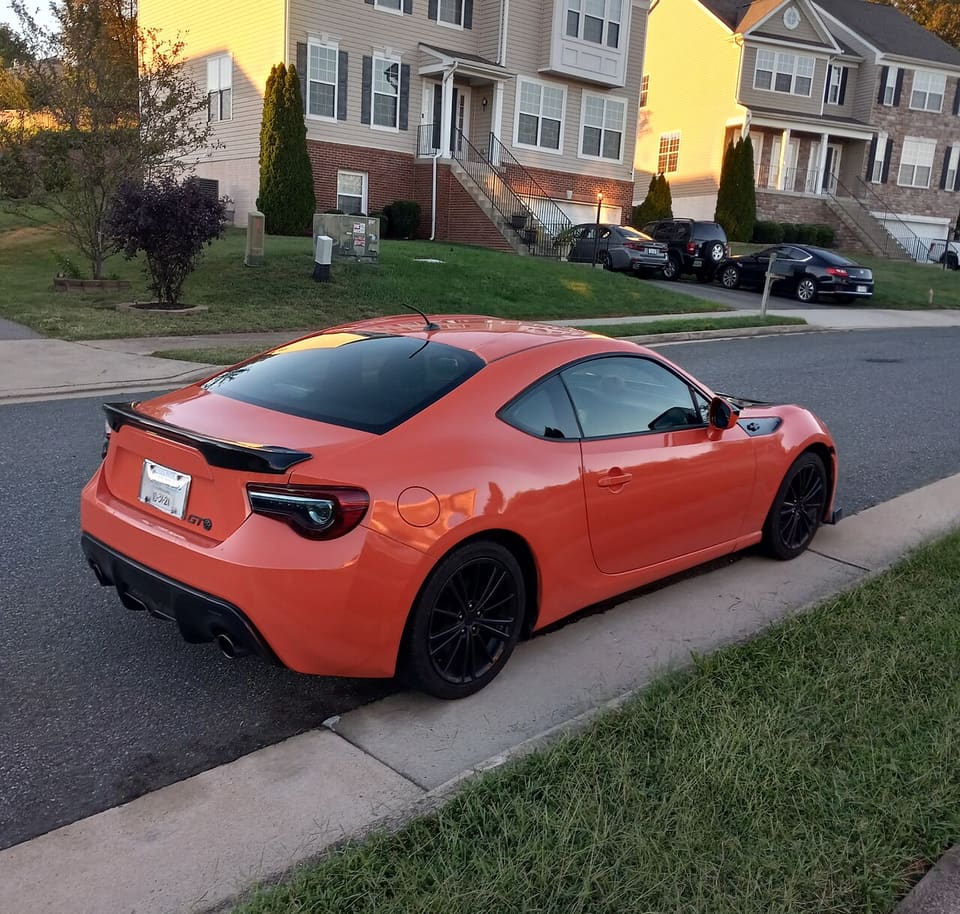
Scion FR-S Oil Change & FA20 Maintenance Guide
- Oil type, capacity and change interval for the FA20 boxer
- Why a flat-four takes more oil than you’d expect
- The 2013 valve spring recall — and how to check your VIN
- What the 4,000 rpm torque dip is and whether it’s a fault
TL;DR: The Scion FR-S uses 0W-20 full synthetic and takes roughly 5.7 quarts with a filter change — noticeably more than a comparable inline-four because the horizontally-opposed layout holds oil in two separate cylinder banks. Change it every 5,000 miles under normal use, and shorter if you track the car. Separately: every 2013 FR-S owner should verify NHTSA recall 18V-772 (valve spring fracture) has been completed on their VIN, because it’s a stall-while-driving risk and the repair is free for life.
The FA20 is a Subaru-built engine in a Toyota-badged car, which means service information is scattered across two brands’ ecosystems. Here’s what actually matters for keeping one healthy.
What Oil Does the Scion FR-S Take?
The FR-S takes 0W-20 full synthetic, and capacity is approximately 5.7 quarts including the filter. That’s a full quart more than most 2.0L inline-fours, which catches a lot of first-time boxer owners off guard.
| Spec | Value |
|---|---|
| Engine | FA20 2.0L flat-four (D-4S direct + port injection) |
| Oil type | 0W-20 full synthetic |
| Capacity (with filter) | ~5.7 qt |
| Change interval | 5,000 mi normal use — shorter for track use |
| Timing system | Chain — no scheduled replacement |
The higher capacity is a direct consequence of the engine layout. A horizontally-opposed engine has two cylinder banks lying flat on either side of the crankshaft, and oil has to be delivered to and drained from both. There’s simply more volume in the system than an inline engine of the same displacement.
Buy six quarts, not five. You’ll use most of the sixth and you don’t want to be short with the car on stands.
Drain plug torque
Factory service data puts the drain plug in the neighborhood of 25 ft-lbs. Confirm this figure against the service manual for your specific model year before you torque it — the aluminum pan is unforgiving, and the FA20’s spec is meaningfully lower than the 33 ft-lbs used on Toyota’s 2AZ-FE and 2AR-FE four-cylinders. If you’ve been working on tCs and xBs, do not carry that number over.
How Often Should I Change the Oil on a Tracked FR-S?
If you run track days or autocross, change it far more often than the 5,000-mile street interval — many owners change immediately after an event weekend. Sustained high-rpm operation, high oil temperatures, and lateral loading all degrade oil faster than street driving, and the FA20 is a popular enough track car that this is a well-trodden path.
Two related habits worth adopting if you track the car:
- Check the level before every session, not just before the event. The FA20 uses some oil under hard use, and that’s normal rather than a defect.
- Consider baffling or an accumulator if you’re running sustained high-g cornering. Oil starvation under prolonged lateral load is a known limitation on this platform, and it’s an expensive one to learn about the hard way.
Which Scion FR-S Models Had the Valve Spring Recall?
The 2013 Scion FR-S was covered by NHTSA campaign 18V-772 (Toyota code J02) for valve springs that can fracture in the 2.0L FA20 engine. Toyota’s filing describes a manufacturing defect that can cause a spring to break in service, leading to engine stall and failure to restart.
This matters more than a typical recall because the failure mode is stalling while driving, which is a crash risk rather than an inconvenience. The repair is extensive — it requires significant engine disassembly — but it is free, and by federal law safety recall repairs never expire as long as parts remain available.
Check your specific VIN. Recall completion varies car by car, and a previous owner may or may not have had it done:
- Enter your VIN at Toyota’s official recall lookup — it covers Scion VINs, since Scion was folded into Toyota
- Or use our Scion recall checker to see every known campaign for your model year at once
- Repairs are performed at any authorized Toyota dealership at no charge
The 2013–2016 FR-S was also subject to NHTSA 16V-086 on automatic-transmission cars with a key interlock issue that could allow the key to be removed out of Park. Lower severity, same principle: free, doesn’t expire, worth verifying.
What Is the FR-S Torque Dip and Is Something Wrong?
Nothing is wrong. The FA20 has a well-documented dip in torque delivery in the neighborhood of 4,000 rpm, and it’s a characteristic of the factory intake and exhaust design — not a fault, not a symptom, and not something a dealer can fix.
It’s noticeable because the engine pulls cleanly below it and hard above it, so the flat spot in between feels more pronounced than the numbers suggest. Owners chase it with equal-length or unequal-length headers, intake changes, and tuning, with varying results. Two honest points about that:
- A tune is doing most of the work in most “fixed the dip” setups. Hardware alone typically shifts the dip rather than removing it.
- This is a modification, not a repair. A perfectly healthy FR-S has this characteristic from the factory. If your car developed a new flat spot it didn’t used to have, that’s a different problem and worth diagnosing properly.
Frequently Asked Questions
Can I use 5W-30 in a Scion FR-S instead of 0W-20?
The factory specification is 0W-20 and there’s no good reason to deviate on a healthy street car. Some owners run a heavier weight specifically for sustained track use where oil temperatures are far above street conditions. That’s a considered trade-off for a specific use case, not a general upgrade.
Does the Scion FR-S have a timing belt?
No. The FA20 uses a timing chain, and there is no scheduled replacement interval. Chains are inspect-only. If you’re budgeting maintenance for an FR-S, you can strike the timing belt service that many owners coming from belt-driven cars expect to pay for.
Is the Scion FR-S the same car as the Subaru BRZ and Toyota 86?
Mechanically, essentially yes. All three were co-developed and built at Subaru’s Gunma plant, sharing the FA20 engine and chassis with differences mostly in suspension tuning, styling and trim. This is genuinely useful for owners: parts, service knowledge and aftermarket support pull from the combined population of all three cars rather than Scion sales alone.
Is some oil consumption normal on the FA20?
A modest amount is normal, particularly under hard or track use, and it is not the same failure mode as the piston ring issue on Toyota’s 2AZ-FE four-cylinder. The practical response is the same either way: check the level regularly and top up as needed rather than assuming it will hold level between changes.
Before you buy parts, decode your VIN to confirm your exact model year and build, and check for open safety campaigns on the same VIN — the valve spring recall is free and doesn’t expire. Full specs, articles and build spotlights live on the Scion FR-S owner hub.
More for your Scion
Scion FR-S Hub
All guides, articles, and builds for the FR-S.