Scion iQ Maintenance & CVT Care Guide (2012–2015)
- Oil and service specs for the 1.3L 1NR-FE
- Why “fill for life” CVT fluid deserves a second look
- The 2012–2013 occupant detection sensor recall
- Living with the smallest car Scion ever sold
TL;DR: The Scion iQ takes 0W-20 full synthetic — only about 3.6 quarts, the smallest capacity in the Scion range — on a 5,000-mile interval, and uses a timing chain with no scheduled replacement. Its CVT is officially “fill for life,” but on a car now well over a decade old many owners change the fluid proactively around 60,000 miles rather than take that label literally. Every 2012–2013 owner should verify NHTSA recall 12V-575, which covers a chafing sensor cable that can disable the passenger airbag.
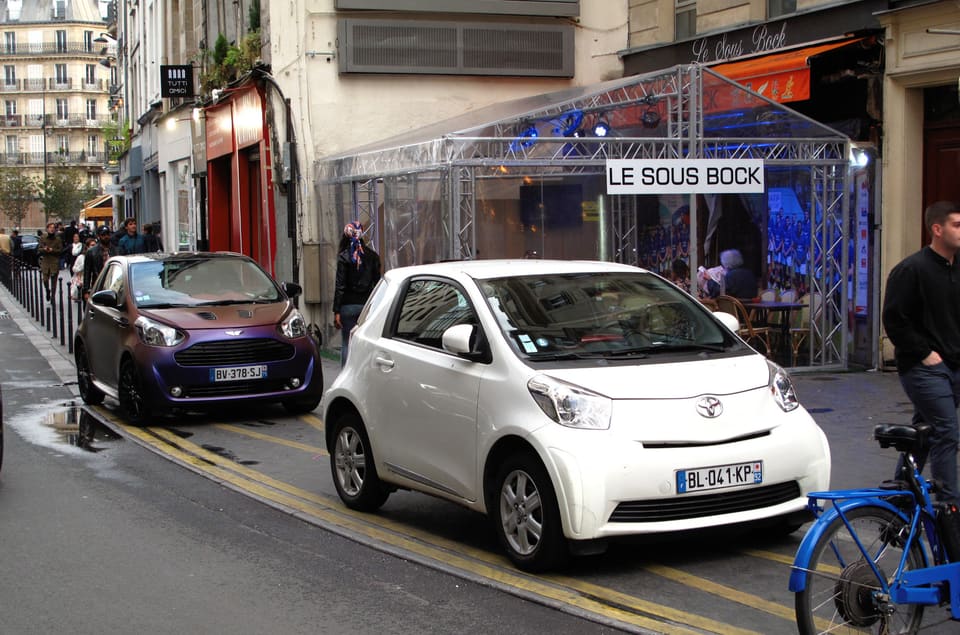
At 120 inches long, the iQ is the smallest car Scion ever sold and one of the smallest ever sold in the US. That packaging drives most of what’s distinctive about owning one.
What Are the Scion iQ’s Service Specs?
| Spec | Value |
|---|---|
| Engine | 1.3L 1NR-FE (94 hp) |
| Oil type | 0W-20 full synthetic |
| Capacity | ~3.6 qt |
| Oil interval | 5,000 mi conventional / up to 10,000 mi full synthetic |
| Drain plug torque | ~29 ft-lbs |
| Transmission | CVT |
| Timing system | Chain — no scheduled replacement |
That 3.6-quart capacity is worth noting if you buy oil in five-quart jugs: one jug covers an oil change with a genuine quart to spare for topping up. Confirm the drain plug torque against your service manual before tightening — the pan is aluminum and strips easily.
Does the Scion iQ’s CVT Need a Fluid Change?
Toyota classified the iQ’s CVT fluid as “fill for life,” but that designation was written for a car with a normal service life ahead of it — not one that’s now over a decade old. Many owners change it proactively around the 60,000-mile mark rather than never.
The honest framing: “fill for life” means Toyota didn’t schedule a change, not that the fluid is chemically immortal. CVTs are more sensitive to fluid condition than conventional automatics because they rely on a belt-and-pulley system where fluid properties directly affect clamping behavior. A CVT replacement on a car worth what an iQ is worth today is effectively a total loss.
Two practical points if you do it:
- Use the correct Toyota CVT fluid specification. Generic “universal” CVT fluids are a genuine risk here. Buy the specified fluid from a dealer parts counter.
- A drain-and-fill is the common approach, not a full flush. Discuss with a shop familiar with Toyota CVTs rather than a generic transmission chain.
This is a judgment call, not a factory requirement. Owners who plan to keep the car generally do it; owners planning to sell soon generally don’t.
What Recalls Affect the Scion iQ?
NHTSA campaign 12V-575 covers 2012–2013 cars and is the significant one. The wiring for the front passenger occupant detection sensor, located under the seat, can chafe against the seat track as the seat is adjusted forward and back. If the cable is damaged, the occupant classification system may misread an adult passenger as a child or an empty seat and disable the front passenger airbag in a crash.
That’s a failure you cannot detect by driving the car, which is exactly why checking the VIN matters. The dealer repair installs a protective sleeve and clamps, free of charge.
Run your VIN through the Scion recall checker for all known campaigns, then confirm the live open/closed status at Toyota’s official recall lookup. Safety recalls never expire.
What’s the Scion iQ Actually Like to Own?
It’s a genuinely clever piece of packaging that asks you to accept real compromises in exchange for a very small footprint.
What works: urban parking becomes trivial, fuel economy is excellent, and the engineering that fits a usable 2+2 into 120 inches — an offset dashboard, a flattened fuel tank, a relocated differential — is legitimately impressive. Toyota sold the same car globally as the Toyota iQ, and Aston Martin’s Cygnet was a rebadged version of it, which remains one of the stranger footnotes in modern automotive history.
What doesn’t: 94 horsepower and a CVT make highway merging deliberate rather than confident, the rear seats are usable only for short trips or children, and cargo space with all seats up is minimal. The short wheelbase also makes the ride busier than a conventional subcompact.
As a second car, city commuter, or curiosity, it’s a strong buy today — production numbers were low, and it has become a niche collector’s item rather than merely a used economy car.
Frequently Asked Questions
Is the Scion iQ the same as the Toyota iQ?
Yes — it’s the same car, sold as the Toyota iQ in most global markets and badged as a Scion for North America. Aston Martin also sold a rebadged, heavily retrimmed version called the Cygnet. Mechanically they share the same platform and drivetrain.
Can you get a Scion iQ with a manual transmission?
Not in North America. US-market Scion iQ models were CVT only. Some other markets offered a manual, but those cars were never sold here.
Are Scion iQ parts hard to find?
Routine service parts — filters, brakes, fluids — are straightforward through any Toyota dealer since the iQ was sold globally in reasonable numbers. Model-specific body panels and trim are harder, simply because US sales volume was low. Any authorized Toyota dealership can order parts and service the car by VIN.
Check your VIN for open safety campaigns — the occupant sensor recall is free and doesn’t expire. Factory fluid capacities for every model are on the Scion maintenance dashboard, and iQ-specific coverage lives on the Scion iQ owner hub.
More for your Scion
Scion iQ Hub
All guides, articles, and builds for the iQ.